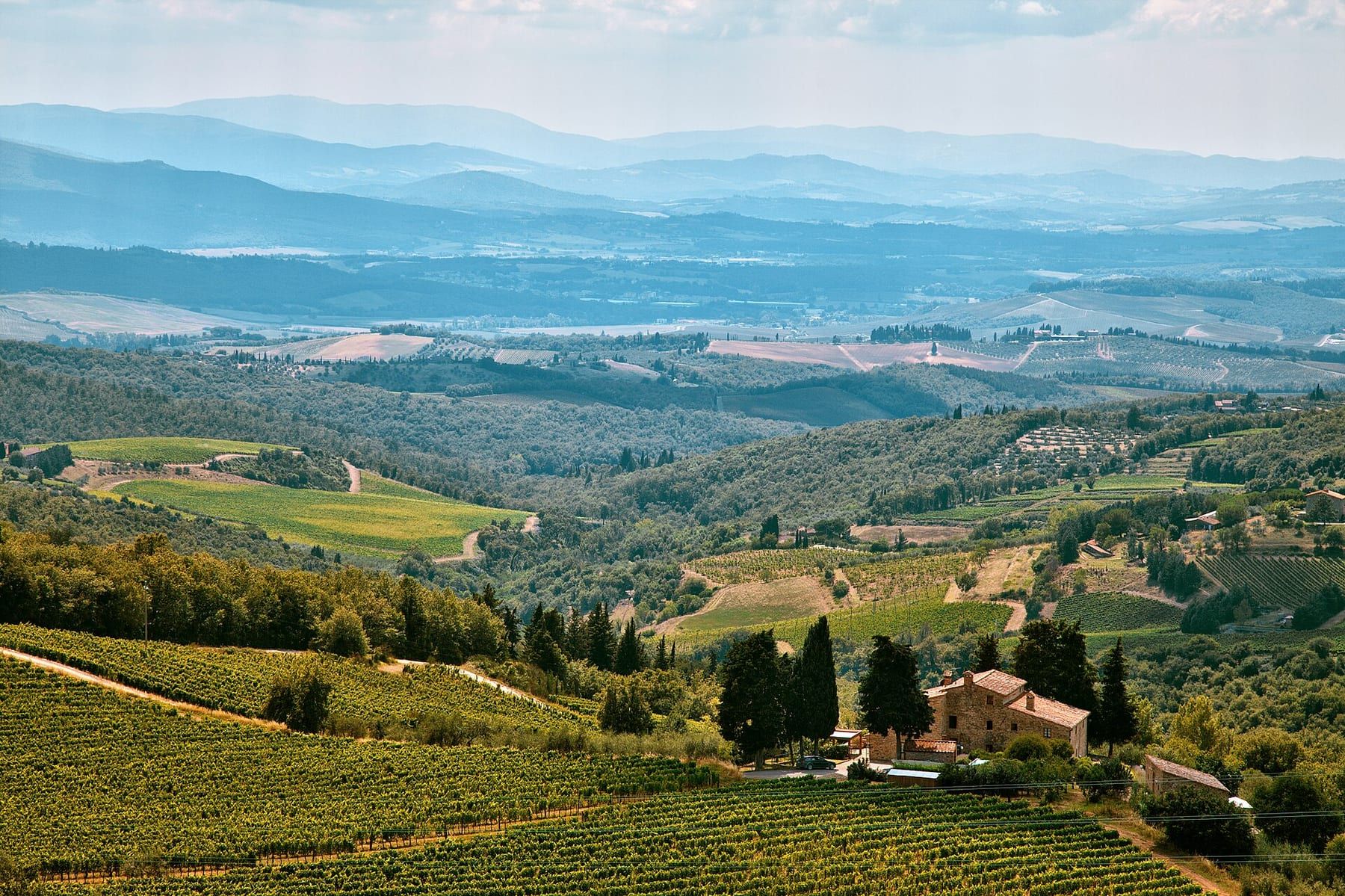
A wine tour from Florence costs from €45 for half a day with two wineries and a tasting, rises to €89 in the small-group version and reaches €114.75 by Vespa. Stated durations run from four and a half hours to six, leaving from the centre and back in the afternoon.
The reason these tours sell so well is practical: there is no railway in Chianti, the bus takes about an hour to reach Greve and the wineries are scattered across the countryside. Without a car you cannot get there; with a car there is the question of who drives. A tour solves both, which is why this is the one Tuscan day trip where the organised price is almost always justified.
Price list compared
Live prices from our partner feeds, cheapest first. Tap a button to open the listing.
| Platform | Price | Rating | Duration | Book |
|---|---|---|---|---|
| Tiqets Chianti: Guided Wine Tour from Florence + Tasting Best price | €45per person | ★ 4.428 reviews | 5 h | Book on Tiqets |
| GetYourGuide Florence: Chianti Wineries Tour with Wine Tasting Top rated | €49.5per person | ★ 4.511,635 reviews | 5 h | Book on GetYourGuide |
| Tiqets Chianti: Day Trip from Florence + Wine Tour & Tasting | €55per person | ★ 4.73 reviews | 5 h 30 min | Book on Tiqets |
| GetYourGuide From Florence: Small Group Wine Tasting Tour to Tuscany | €89per person | ★ 4.94,585 reviews | 4 h 30 min | Book on GetYourGuide |
Chianti Classico, Brunello, Nobile, Bolgheri: what changes
The four denominations you will hear named are different zones, different grapes and different prices. Knowing them tells you what is being poured.
Chianti Classico: made in the historic zone between Florence and Siena, it must contain at least 80% Sangiovese, with the remaining 20% from authorised varieties. It is the only one that carries the Black Rooster mark on the bottle, managed by the Consorzio. It is also the only one you can reach in half a day from Florence: when a tour says “Chianti”, this is what it means.
Brunello di Montalcino: pure Sangiovese, aged a minimum of five years of which at least two in oak barrels. It comes from much further south, in the Val d’Orcia, about two hours by car: tours that include it are full days from €159 upwards.
Vino Nobile di Montepulciano: at least 70% Sangiovese, known there as Prugnolo Gentile, with a minimum ageing of two years. Same area as Brunello, same distance from Florence.
Bolgheri: the denomination of the Livorno coast, where the rules allow Cabernet Sauvignon, Merlot and Cabernet Franc up to 100% and Sangiovese stays in the minority. This is supertuscan country: not a day-trip wine from Florence, but one you will find by the glass in the wine bars of the centre.
Half day or full day: how many wineries
Half a day is the standard format: departure in the early afternoon or mid-morning, two wineries, back after five hours. In some products the second stop is a vinegar works or an olive mill instead of a second wine estate, which changes the content but not the price.
| Format | Price | Length | Wineries |
|---|---|---|---|
| Chianti half day (Tiqets) | €45 | 5 h | 1 winery + vinegar works, 7 tastings |
| Chianti day trip (Tiqets) | €55 | 5 h 30 | 2 wineries |
| Chianti winery tour (GetYourGuide) | €49.50 | 5 h | 2 wineries |
| Small group with olive oil (GetYourGuide) | €89 | 4 h 30 | 2 wineries |
| Chianti by Vespa | €114.75 | 6 h | 1 winery + guided ride |
| Val d’Orcia: Montepulciano and Montalcino | from €159 | full day | 2 wineries |
A full day only makes sense if you are aiming for the Val d’Orcia or want to pair wine with a town: the tours that combine Siena, San Gimignano and a tasting start at €49 and are described in day trips from Florence.
What “tasting” actually means
It is the most elastic word in the business. On the listings for sale it means three different things:
- A technical tasting at the winery: three or four glasses poured in sequence, with an explanation of grapes and ageing, served with bread and oil. This is the most common half-day format.
- A tasting with local produce: the same glasses plus a board of cured meats, pecorino and bruschetta. Not lunch, but it takes the edge off.
- A tasting with lunch: a hot dish served at the winery or farm, generally on full-day tours and on products above €90.
Only one of the products compared here states the exact number: seven wine tastings, plus extra-virgin olive oil and Tuscan produce, on the €45 tour. The rest stay vague. If the number of glasses matters to you, choose the operator who writes it down: it is also a sign of seriousness.
Two details nobody mentions in advance. Purchases at the winery are not included, and the selling moment is part of the visit: nobody forces you, but the moment comes. And insurance or a supplement payable on site exists on some Vespa tours, where it is offered at departure for around twenty euros: ask before booking whether it is compulsory.
The Vespa tour: who it is really for
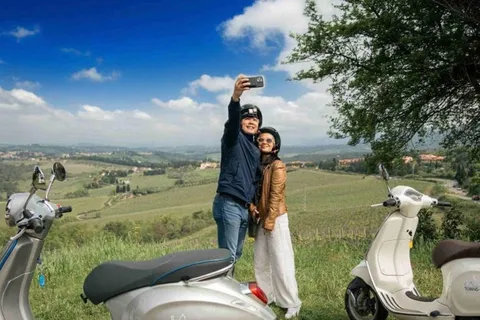
Chianti by Vespa costs €114.75 for six hours and has excellent reviews, but it is a very specific product. You ride, on narrow uphill lanes, with bends and gravel on the winery access tracks. The alternatives inside the same product are riding pillion or taking an electric car for one or two people.
It works if you enjoy riding and the tasting is a side dish. It does not work if you came to drink: whoever rides has to stay sober, and paying twice the price of a minivan tour in order not to taste makes no sense.
-
from €55 per person
Book on Tiqets -
from €114.75 per person
Book on GetYourGuide -
from €89 per person
Book on GetYourGuide
The in-town alternative: wine bars, enoteche and wine windows
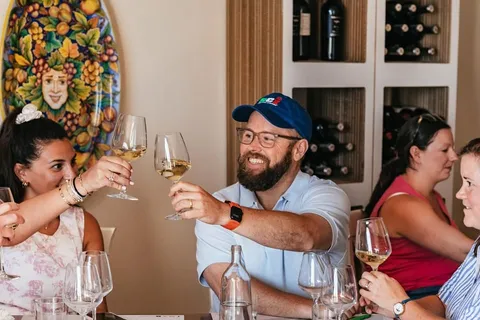
If you have two days and want to give them to the Uffizi, the Accademia and the Duomo, Tuscan wine can be tasted perfectly well without leaving the walls. The enoteche in the centre pour Chianti Classico, Brunello and Bolgheri by the glass: you pay for the glass instead of five hours on a coach, and you can compare three denominations in one evening, which never happens at a winery.
The buchette del vino, or wine windows, are the Florentine version of takeaway service: stone hatches about forty centimetres high, cut into the walls of noble palaces, through which families sold the wine from their own estates. The association that looks after them keeps a census with a map, and some are back in use, serving wine and coffee straight through the little window. Hunting for them is a free itinerary in the centre, and it pairs well with a Florence walking tour.
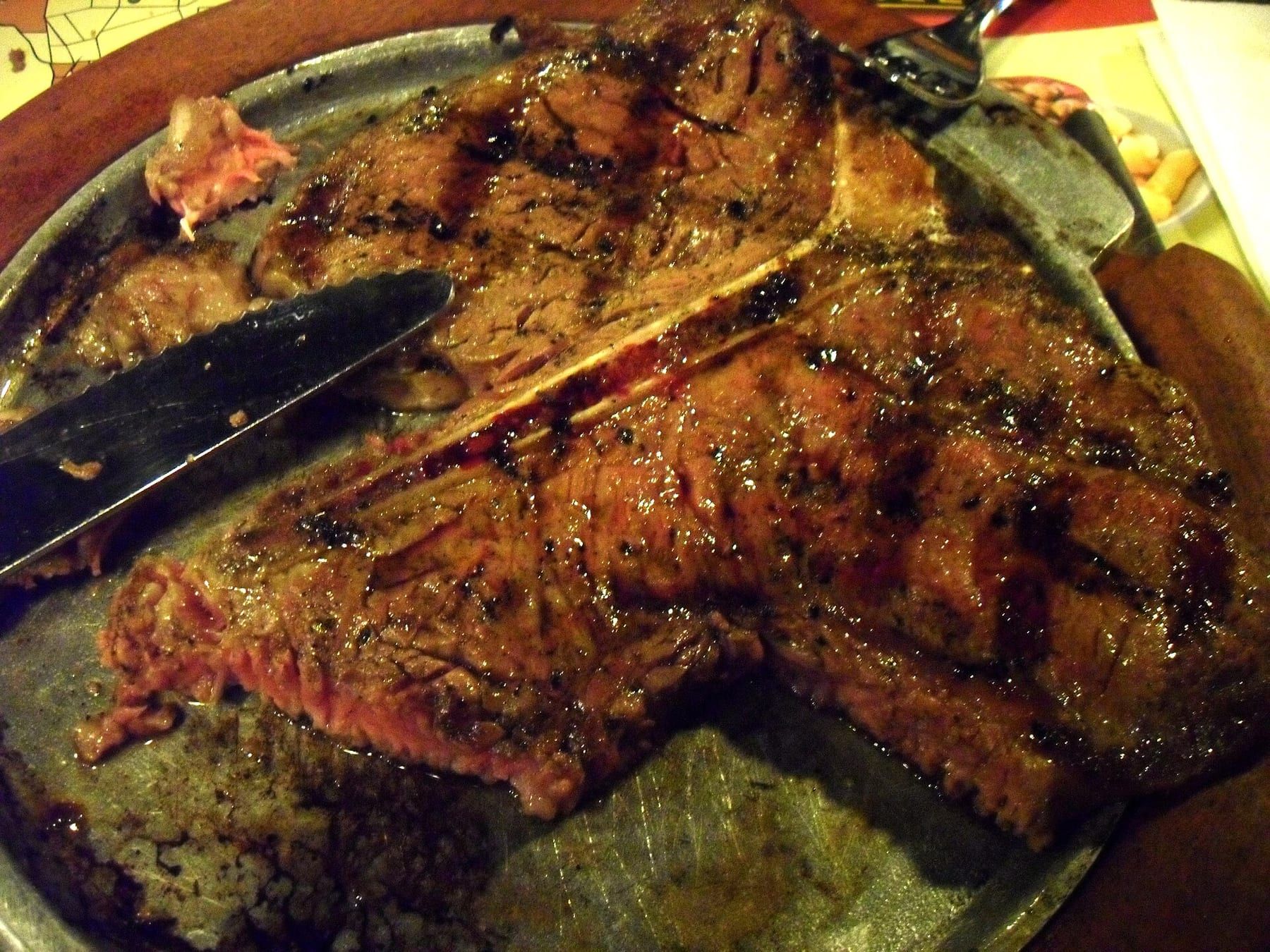
To match wine and food without leaving town, food tours of the centre start at €42 and take in the stalls of the Mercato Centrale: bistecca alla fiorentina is sold by weight, around €50 a kilo, with a minimum cut of roughly a kilo for two.
Designated drivers and alcohol limits
The legal driving limit in Italy is 0.5 grams per litre. It is zero for newly qualified drivers, for anyone under 21 and for professional drivers. Above 0.5 come administrative penalties, above 0.8 a criminal offence, with licence suspension and fines that climb fast.
In practice: four glasses in a morning, even small ones, take a person of average build well past the threshold. If you hire a car for Chianti, one of the group does not drink — and that means does not drink, not “sips and vaguely spits”. If nobody in the group is willing to give it up, a tour with a driver costs less than the hire car plus the risk.
This is also why wine tours are the one segment where the organised format is almost always rational, while for Siena or Pisa going it alone wins easily.
Seasons: the harvest and the months to avoid
The harvest runs through September: this is when the wineries are working, the air smells of must and you see the productive side rather than just the tasting room. The flip side is that visits can be shorter or less personal, because the staff are busy.
October is the wettest month of the year in Florence, with more than 105 millimetres on average and almost nine days of rain; November is wetter still. The Chianti hills in the rain lose most of their point, and Vespa tours are often rescheduled.
July and August are hot — average highs touch 32 degrees — but the cellars are cool and transfers are in air-conditioned vehicles. Winter brings the lowest prices and the smallest groups, with bare vines and longer tastings. The month-by-month picture is in when to visit Florence.
Nearby
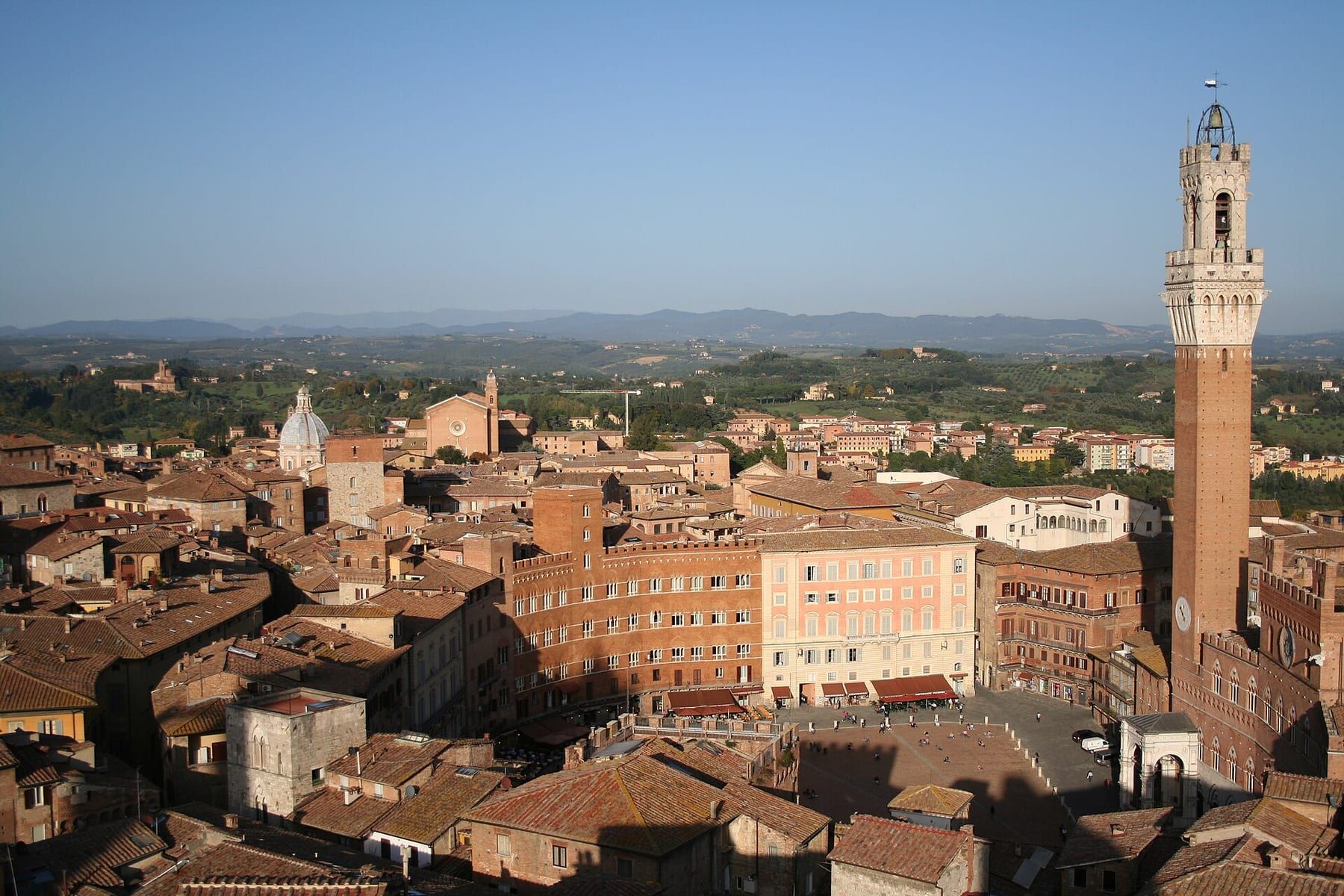
Anyone who wants to combine wine and landscape in a single day will find the Siena, San Gimignano and Monteriggioni combinations in day trips from Florence. Anyone staying in town who wants a tasting with a view can walk up to Piazzale Michelangelo at sunset, which is free. The profiles of the operators running these tours, with reviews and cancellation rules, are in platform and operator reviews.
Choosing a Chianti wine tour from Florence takes three questions: how many wineries, how many glasses, who drives. Prices start at €45, and the difference between €45 and €89 lies almost entirely in the size of the group and in what sits on the plate beside the glass.
Check available departures from €45 · ★ 4.4
Frequently asked questions
How much does a Chianti wine tour from Florence cost?
At the time of checking, prices start at €45 on Tiqets and €49.50 on GetYourGuide for half a day with two wineries and a tasting. The small-group format costs €89 for four and a half hours, the Vespa tour €114.75 for six hours. Private tours sold direct by operators run to more than €800 per group.
How many wineries do you visit in half a day?
Two, in most products. Some five-hour tours visit only one and add a vinegar works or an olive mill. Three wineries in one morning is the exception: the drives on hill roads eat up most of the time.
What does a wine tasting include?
It varies a great deal. One tour states seven wine tastings plus extra-virgin olive oil and Tuscan produce; others speak vaguely of a "tasting paired with local products", which in practice means three or four glasses with bread, cured meats and pecorino. The number of glasses is only sometimes written on the listing: if it matters to you, pick the product that states it.
Can you visit Chianti from Florence without a tour?
Only up to a point. The bus reaches Greve in Chianti in about an hour, but there is no railway and the wineries are scattered across the countryside on minor roads. Without a car you cannot reach them, and with a car there is the question of who drives.
What is the difference between Chianti Classico and Brunello di Montalcino?
Chianti Classico is made in the historic zone between Florence and Siena, with at least 80% Sangiovese, and carries the Black Rooster mark. Brunello di Montalcino is pure Sangiovese, ages for at least five years of which two in wood, and comes from much further south, in the Val d'Orcia: it is out of reach on a half-day trip from Florence.
Can I drive after a wine tasting in Tuscany?
The legal limit in Italy is 0.5 grams per litre, but it is zero for newly qualified drivers, for anyone under 21 and for professional drivers. A serious tasting passes that threshold easily: if you are travelling by car you need a designated driver who does not drink, or a tour with a driver.
When is the best time for a wine tour from Florence?
The harvest runs through September, when the wineries are in full swing: the atmosphere is the best of the year but visits can be shorter because the staff are working. October is the wettest month in Florence, with more than 105 millimetres on average; winter is quiet and the tours still run, but the landscape is bare.
Can you taste Tuscan wine without leaving Florence?
Yes, and it is the most underrated alternative. The wine bars and enoteche in the centre serve Chianti Classico, Brunello and Bolgheri by the glass, with no five hours on a coach. There are also the wine windows, the little stone hatches in the historic palaces, some of which are back in use serving by the glass.
Official sources
- Consorzio Vino Chianti Classico — Production rules (PDF)
- Consorzio del vino Brunello di Montalcino — About Brunello
- National vine varieties catalogue — Vino Nobile di Montepulciano rules
- Consorzio per la Tutela dei Vini Bolgheri DOC — The wines
- ACI — Italian Highway Code, article 186-bis
- Polizia di Stato — Road safety: what the code changed
- Associazione Buchette del Vino — Census and maps
- Autolinee Toscane — Lines and timetables