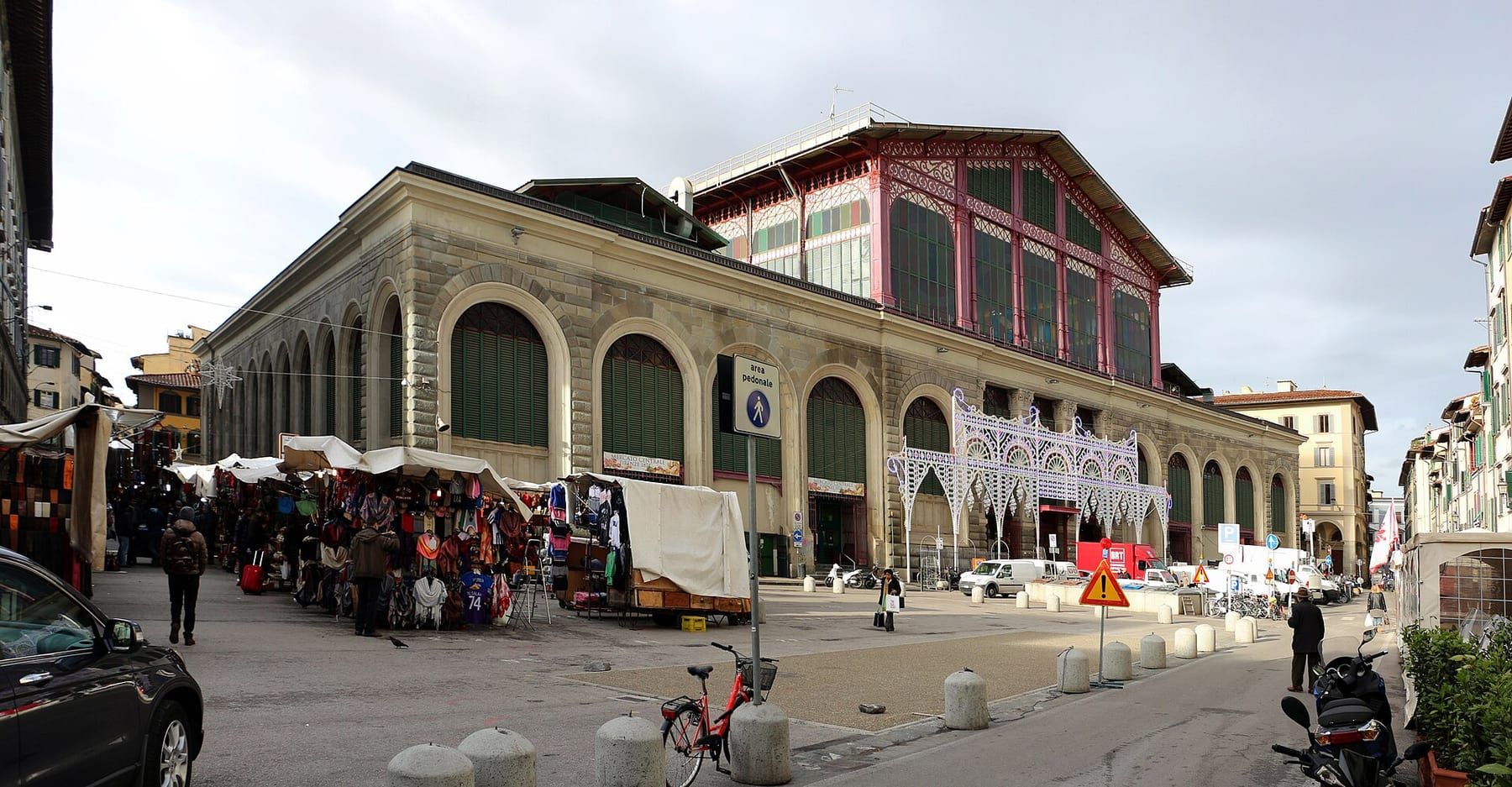
There is no entrance fee at Mercato Centrale Florence: you only pay for what you eat. What confuses everyone is the hours, because there are two sets: the historic food market on the ground floor opens 7:00–15:00 Monday to Friday and is closed on Sunday, while the food hall on the first floor runs from 9:00 to 23:00 every day. Here you will find what you actually eat on each floor, what lampredotto and bistecca cost, and what cooking classes really cost.
Two different markets in one building
The nineteenth-century iron and glass building, in the San Lorenzo district, houses two things that share neither the same crowd nor the same timetable.
On the ground floor is the real food market: butchers, fishmongers, fruit and vegetable stalls, cheese, cured meats, tripe sellers. Florentines do their shopping here and restaurants stock up here. It opens at dawn and closes in the early afternoon.
On the first floor is the food hall, opened by Umberto Montano with the Human Company group: a covered square with around twenty single-theme counters — pasta, pizza, meat, fish, fried food, ice cream, beer, wine — shared tables and a till at each stand.
They are two different experiences. If you want to see a market, you have to come in the morning. If you want dinner, you have to go upstairs.
Ground floor: the historic market and the tripe stalls
Hours, according to the City of Florence: Monday–Friday 7:00–15:00, Saturday and eves of holidays 7:00–17:00, closed Sunday.
The right time is between 8:00 and 11:00: the stalls are full, the customers are local and nobody is in too much of a hurry to explain what muscolo is or how lardo di Colonnata is sliced.
Worth buying to take home: aged pecorino toscano, finocchiona, cinta senese salami, Tuscan extra virgin olive oil (look for DOP or IGP on the label, not just the word “Tuscan”), cantucci. Fruit and vegetables are at normal prices, not city-centre ones.
And then there are the trippai, the stalls selling lampredotto and tripe: not a folkloric attraction but working-class street kitchens that have been there for generations.
Lampredotto and tripe: how to order
Lampredotto is the abomasum, the fourth stomach of the cow, slow-cooked in broth with tomato, onion, celery and parsley, then sliced and served in a bread roll, with the top of the roll dipped in the cooking broth.
How to order it, in three words: bagnato (roll dipped in the broth), salsa verde (parsley, garlic, anchovy) and piccante (chilli). The standard combination is “bagnato, con verde e piccante”.
Trippa is the rumen, and it is the version served in a tub, Florentine style: cooked with tomato and parmesan, eaten sitting down with a fork.
Price is the real thermometer. A lampredotto sandwich costs €5 at most stalls, with a provincial average of around €5.50 and a low of €4.50, according to the survey published by TroppaTrippa. At the stalls near the Duomo it reaches €10: same sandwich, different address. If you are asked for more than €7, you are paying for the location.
Bistecca alla fiorentina and the price per kilo
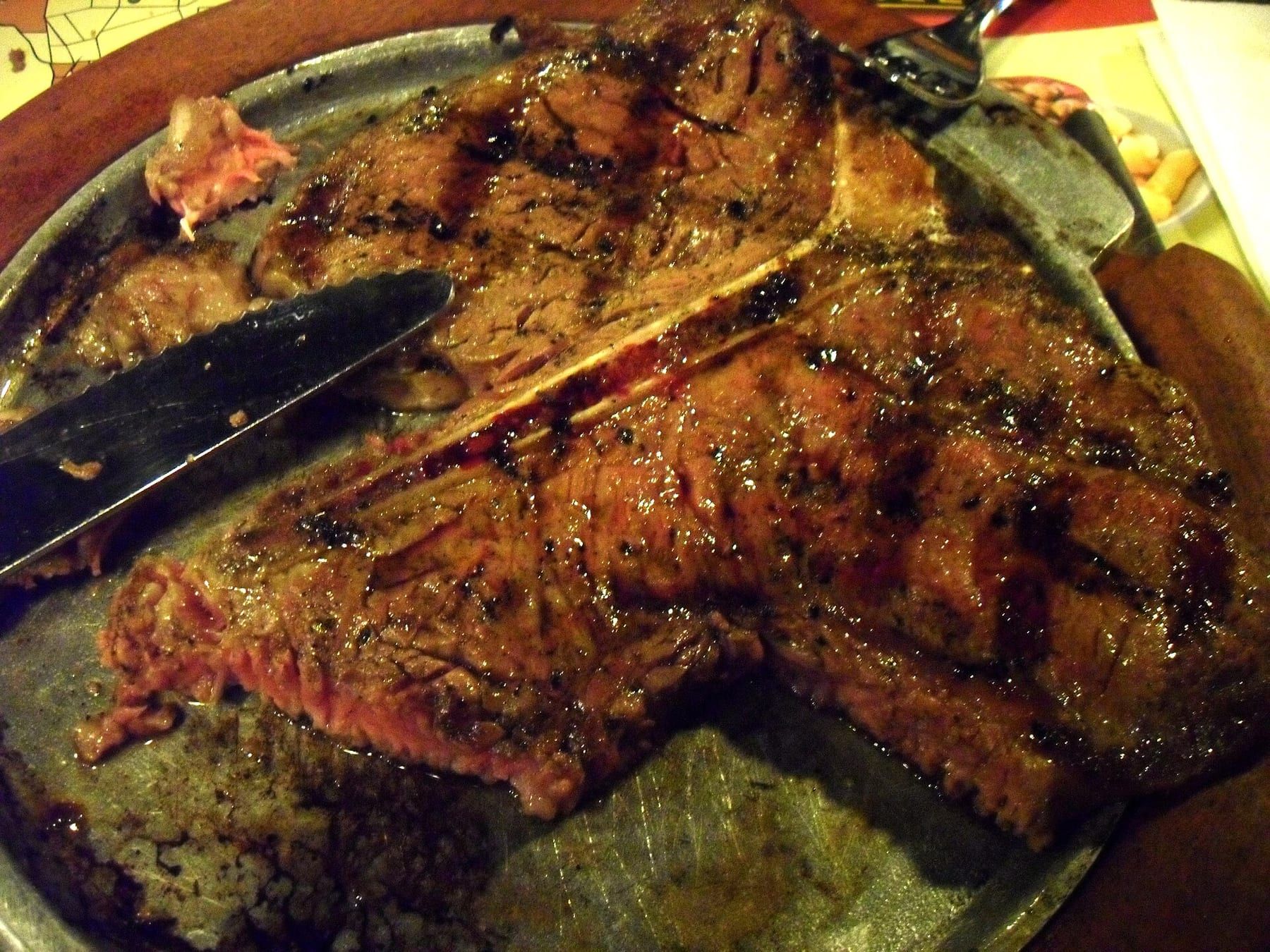
Bistecca alla fiorentina is a T-bone cut of sirloin, at least three fingers thick, grilled over coals and served rare. It is sold by weight, and that is where the misunderstandings start: the menu shows the price per kilo, not per portion.
| Item | Realistic figure |
|---|---|
| Average price per kilo | ≈ €50/kg |
| Common range | €40–60/kg |
| Certified Chianina | €60–86/kg |
| Minimum cut | ≈ 1–1.2 kg, for 2 people |
| Indicative bill for two | €50–75 for the meat alone |
Figures collected from Il Forchettiere and other Florentine food publications. Three rules that prevent a surprise bill: ask for the price per kilo before ordering, ask how much the piece weighs before it goes on the grill, and accept that a fiorentina is not served well done — if they cook it well done because you asked, it was never a fiorentina.
A “tourist” steak at €15 a portion, pre-portioned and thin, is a different thing: it may be good, but it is not that.
Cooking classes: where they are and what they really cost
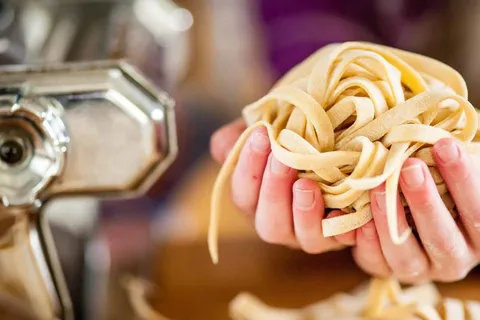
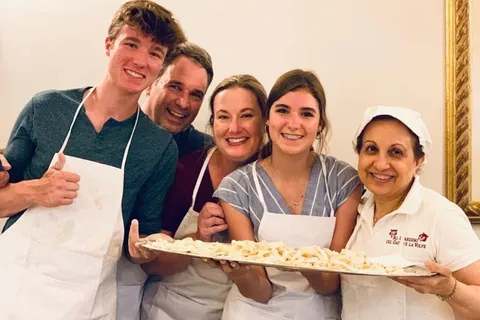
“Florence cooking class” is one of the most searched phrases in the city, and Mercato Centrale is the most common starting point: many classes begin with a walk around the stalls to buy the ingredients and continue in a kitchen nearby.
First trap: not all classes take place inside the market. Some start straight away at a cookery school in the centre or at a villa outside town. The exact meeting point is on the voucher, not in the description: read it before you book a slot wedged between two museums.
Second trap, the price one. The realistic range for a serious class with lunch or dinner is €50–140 per person for 3–5 hours: at the time of checking, Tiqets listings run from €48 for a pasta and gelato class to €139 for a class with steak and market shopping, and past €250 for a lesson with a starred chef. The lowest “from” prices on the platforms are almost always short versions or leftover time slots: open a date and check the total.
What to look at before you pay: how many people per class (under 12 you actually cook, over 20 you watch), whether wine is included, whether you eat what you have cooked, and whether the recipe is fresh pasta made by hand or just assembly.
Price list compared
Live prices from our partner feeds, cheapest first. Tap a button to open the listing.
| Platform | Price | Rating | Duration | Book |
|---|---|---|---|---|
| GetYourGuide Florence: Pasta Cooking Class with Unlimited Wine Best price | €18per person | ★ 4.915,810 reviews | 2 h | Book on GetYourGuide |
| GetYourGuide Florence: Pasta & Tiramisu Cooking Class with Unlimited Wine | €18per person | ★ 4.98,524 reviews | 3 h | Book on GetYourGuide |
| Tiqets Italian Cooking Class: Pizza & Gelato Making | €47.4per person | ★ 4.89 reviews | 3 h | Book on Tiqets |
| Tiqets Florence: Pasta & Gelato Cooking Class | €48per person | ★ 4.710 reviews | 3 h | Book on Tiqets |
Food tours: who they are for and who they are not
A food tour lasts 2.5–3.5 hours, takes in 4–6 stops across market, tripe stall, delicatessen, wine bar and gelateria, and costs between €40 and €120 per person. It is worth it on your first day in the city, when you want to work out where to come back on your own; it is worth much less if you already have the address of the tripe stall in your pocket.
The difference between a good tour and a mediocre one is not the number of tastings but the guide: always ask whether the tastings are included in the price or paid separately, and whether the group is 8 people or 25.
Price list compared
Live prices from our partner feeds, cheapest first. Tap a button to open the listing.
| Platform | Price | Rating | Duration | Book |
|---|---|---|---|---|
| GetYourGuide Florence: Street Food Tour with Wine & Local Guide Best price | €42per person | ★ 4.81,903 reviews | 2 h 30 min | Book on GetYourGuide |
| Tiqets Florence: Guided Food Tour + Tastings + All’Antico Vinaio Skip The Line Access | €59per person | ★ 4.99 reviews | 2 h 30 min | Book on Tiqets |
-
from €18 per person
Book on GetYourGuide -
from €18 per person
Book on GetYourGuide -
from €59 per person
Book on Tiqets
Sant’Ambrogio, the market Florentines use
On the other side of the centre, ten minutes’ walk from Santa Croce, is the Mercato di Sant’Ambrogio: Monday–Saturday 7:00–14:00, closed Sunday, according to the market’s own website.
It is smaller, with a covered hall of food stalls and an open-air market in the square, and inside there is a long-standing trattoria at neighbourhood prices. No food hall, no signs in English, and it closes early.
Simple rule: if you want to take photographs and eat late, Mercato Centrale. If you want to shop and eat like the people who live here, Sant’Ambrogio in the morning.
The rule against tourist traps
Florence has fewer overpriced food traps than its reputation suggests, but they are heavily concentrated: Piazza del Duomo, Piazza della Signoria and the two ends of Ponte Vecchio.
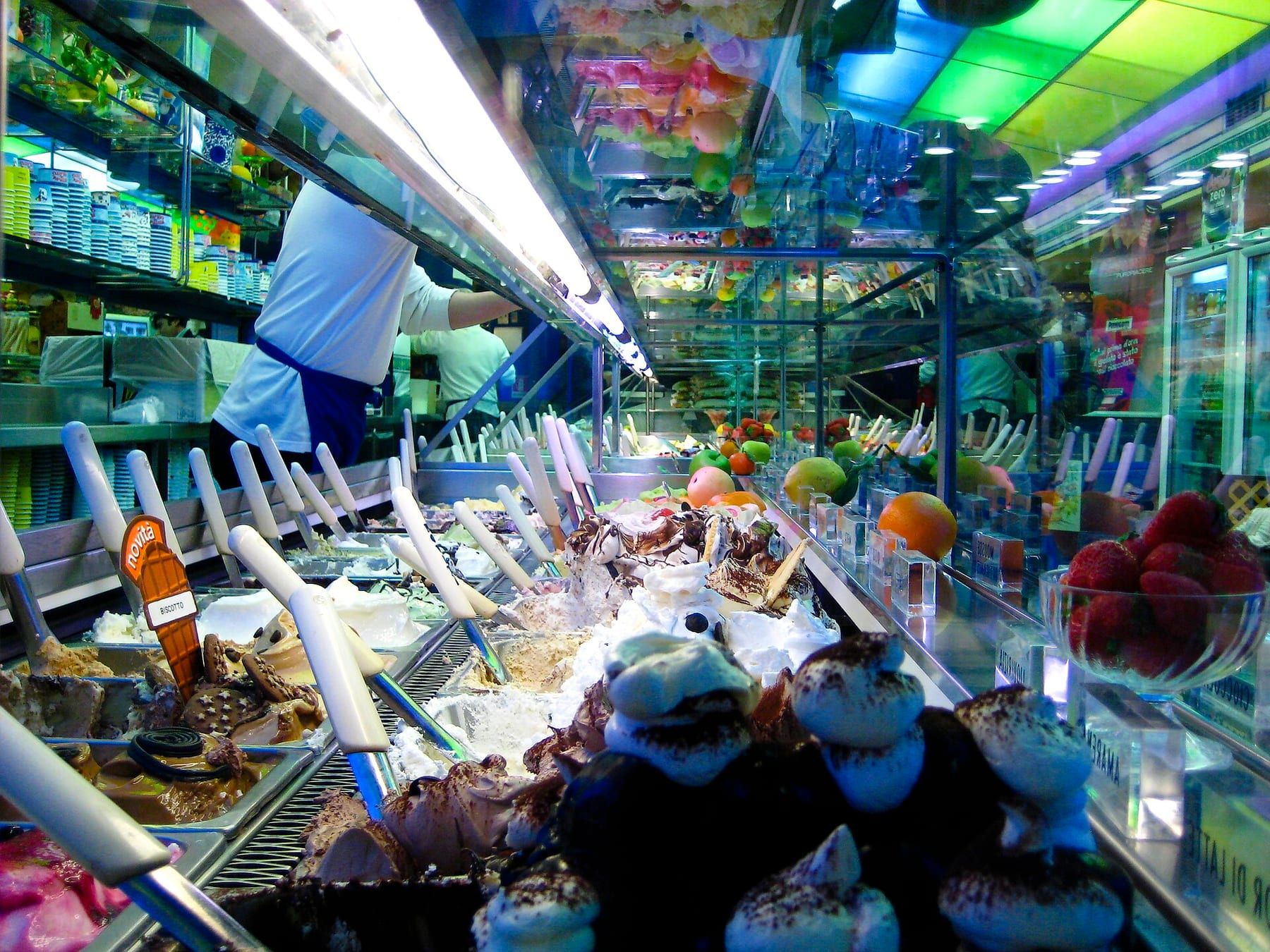
Five signals that work anywhere. A laminated tourist menu in six languages with photos of the dishes: walk on. Someone inviting you in from the doorway: good places do not need a tout. Gelato in tall coloured mounds piled outside the tub: artisan gelato stays covered and has muted colours. Steak at a fixed price per portion: it is not by weight, so it is not the real thing. And the coperto, the cover charge: it is normal in Tuscany, but check the amount on the menu before you sit down, not on the bill.
The last check, the one that always works: look at who is at the tables at one in the afternoon. If there is not a single Florentine, that is not a coincidence.
Nearby
Mercato Centrale is a short walk from the Medici Chapels and the basilica of San Lorenzo, and five minutes from the station, useful if you have suitcases and need luggage storage. Southwards, ten minutes on foot takes you to the Duomo; towards the Arno, twenty to Ponte Vecchio.
If you want to carry on with food and wine, trips into Chianti are on the wine tours page and longer excursions on the Tuscany day trips page. To fit market, museums and sunset into the same day, see things to do in Florence and Piazzale Michelangelo.
Mercato Centrale Florence is free, open until 23:00 upstairs and until 15:00 downstairs: the only spending that really deserves a booking is the cooking class or the food tour.
Check dates and prices for the pasta class from €18 · ★ 4.9
Frequently asked questions
What are the opening hours of Mercato Centrale Florence?
There are two different timetables. The ground floor, the historic food market, opens Monday to Friday 7:00–15:00 and on Saturdays and the eves of holidays 7:00–17:00, and is closed on Sunday. The food hall on the first floor opens every day 9:00–23:00, according to mercatocentrale.it.
Do you have to pay to get into Mercato Centrale?
No, entry is free on both floors and no booking is needed. You only pay for what you eat and buy at the counters.
How much is a lampredotto sandwich?
The most common price is €5, with a provincial average of around €5.50 and a low of €4.50 according to the TroppaTrippa price survey. At the stalls in Piazza del Duomo it can reach €10: same sandwich, tourist price.
How much does bistecca alla fiorentina cost per kilo?
It is sold by weight, typically around €50 per kilo, with a common range of €40 to €60; certified Chianina beef reaches €60–86 per kilo. The minimum cut is about 1–1.2 kg, which is one steak for two people.
Do Florence cooking classes take place inside Mercato Centrale?
Not always. Some include a walk around the stalls and then move to a nearby kitchen, others start somewhere else entirely. The exact meeting point is on the voucher: check it before you book a time slot.
How much does a cooking class in Florence really cost?
The realistic range is €50–140 per person for 3–5 hours, lunch or dinner included. The "from" prices you see on the platforms are often short versions: open a date and check the total before you pay.
What is the alternative to Mercato Centrale?
Mercato di Sant'Ambrogio, on the other side of the centre: it opens Monday to Saturday 7:00–14:00 and is closed on Sunday. It is smaller, far less touristy and has a trattoria inside.
Is Mercato Centrale open on Sunday?
Only the first floor. The food hall opens on Sunday too, 9:00–23:00, while the food stalls on the ground floor stay closed.